Planning a Cruise Around Accessibility Needs
Cruise accessibility planning means matching your needs with an accessible cabin, mobility support, transport, excursions, and onboard services before booking. At CruiseTourScottsdale.com, we help organize these details with the cruise line and travel suppliers.
Written by Wendy Denny
Request an Estimate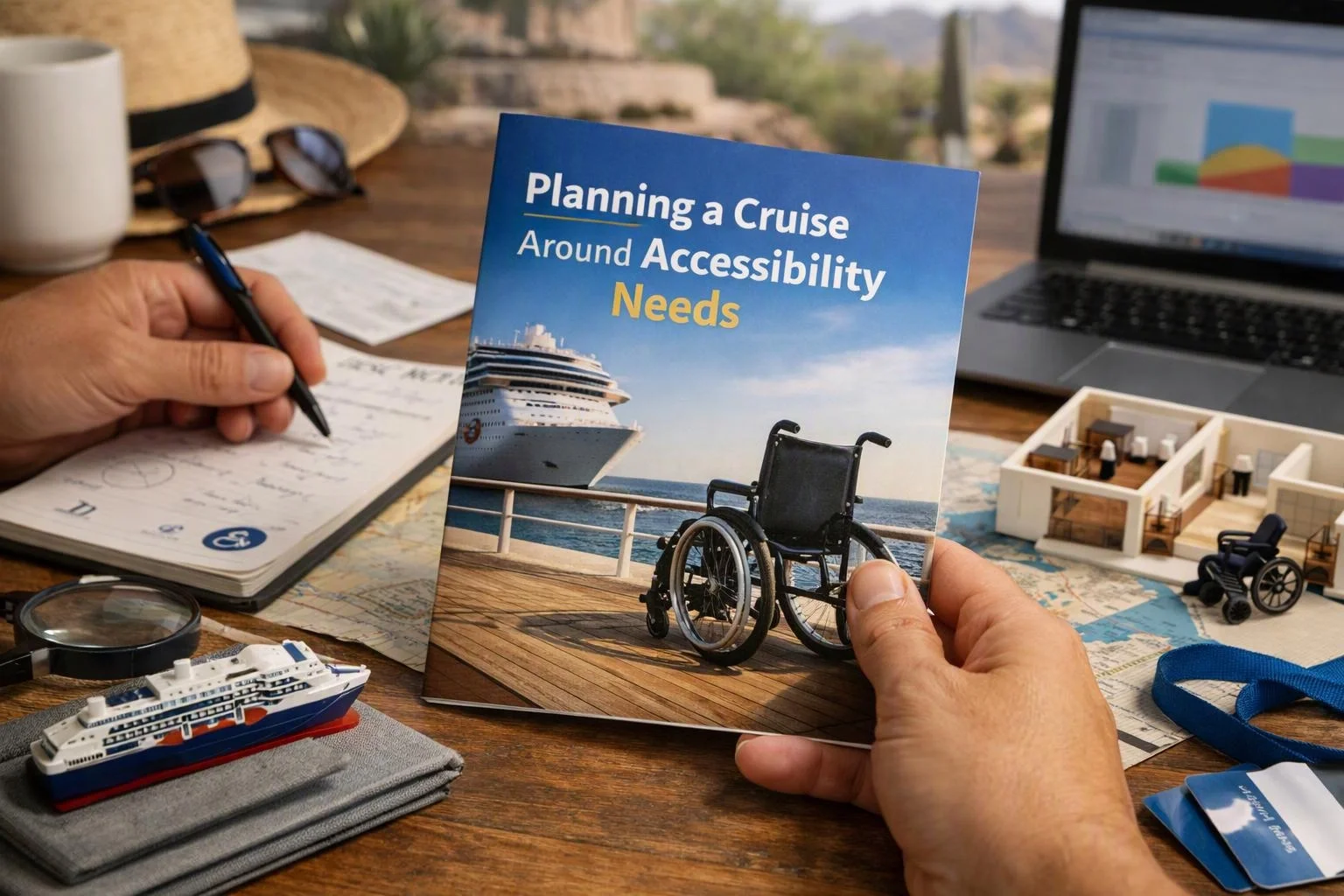
Why Accessibility Planning Matters Before You Book
Cruise accessibility planning coordinates an accessible cruise cabin, mobility assistance, shore excursions, and onboard accessibility before you commit to a sailing. We review how each part of the trip connects, from embarkation to disembarkation.
An accessible cabin may have different cabin features, doorway clearance, bathroom access, and mobility device storage. Ship elevators, boarding ramps, dining areas, and entertainment spaces also affect comfort.
Our team can connect these details through our Cruise agency service. Wendy Denny provides the author guidance for this accessibility planning resource.
Signs Your Cruise Needs an Accessibility Review
A cruise needs an accessibility review when any part of movement, communication, care, or shore access could create a barrier. These signs help identify planning needs before booking.
We turn these concerns into a clear special needs request. A travel companion should also understand the plan and know when mobility assistance is needed.
What Can Make a Cruise Harder to Access?
Ship design, cabin layout, port conditions, and transportation can make cruise access harder. We review these factors together because one difficult connection can affect the full day.
Transportation access also matters before and after the ship. We check whether the transfer vehicle can carry the wheelchair, mobility scooter, medical equipment, and travel companion safely.
Guides such as How to Tell When a Cruise May Not Fit the Vacation You Want can help travelers consider the full trip, not only the ship.
How to Plan an Accessible Cruise
Accessible cruise planning works best when needs are recorded before the cabin and travel services are finalized. We use a step-by-step review to keep requests connected.
Request cruise mobility assistance during the booking process, not after travel plans are complete. We keep the accessibility request, cabin choice, transport plan, and booking confirmation aligned.
Our team can also review dietary needs and communication needs with the cruise line accessibility team.
What to Compare Before Choosing a Cruise
Compare the full travel chain before choosing a cruise, because an accessible cabin alone doesn't confirm an accessible vacation. The table below shows the main areas we review.
| Area | What to review |
|---|---|
| Accessible cabin | Doorway access, bathroom design, bed placement, turning space, and equipment storage. |
| Ship accessibility | Elevators, ramps, public areas, dining spaces, pools, theaters, and emergency routes. |
| Port accessibility | Dock access, tender port procedures, gangways, and movement between ship and shore. |
| Shore excursions | Walking distance, terrain, steps, seating, vehicle access, and shore excursion access. |
| Transportation | Accessible transportation, transfer vehicle capacity, loading needs, and equipment handling. |
| Onboard services | Dining support, communication options, medical arrangements, and special services. |
We compare these areas against the guest's actual needs. This process helps prevent a cabin booking from moving forward without matching port or excursion plans.
Can You Bring a Wheelchair or Scooter on a Cruise?
Yes, you can often bring a wheelchair or scooter, but the cruise line must confirm equipment rules, cabin access, storage, and transportation arrangements before booking.
A wheelchair or mobility scooter may need to fit through the cabin doorway and remain stored in the cabin. Battery type, charging needs, and ship access rules can affect approval.
We ask the cruise line to review the mobility device, accessible cabin, boarding process, and transfer vehicle together. That review helps prevent problems during embarkation and port transfers.
How to Tell the Cruise Line About Special Needs
Tell the cruise line about special needs during the booking process and provide clear details through its required accessibility forms.
A special needs request should describe mobility assistance, medical information, dietary needs, sensory needs, and communication needs. Specific details help the cruise line accessibility team understand what support is required.
We send the relevant information through the required process and track the response with the booking record. We also help connect the request to the accessible cabin, shore excursions, and transportation plan.
Accessibility Details to Confirm Before Final Booking
Confirm every accessibility detail before final booking so the travel plan reflects the guest's actual needs. These checks create a practical prevention list.
We place confirmed details with the booking confirmation and travel documents. A final review also helps the travel companion understand the plan.
How CruiseTourScottsdale.com Supports Accessibility Planning
We support accessible travel planning by connecting cabin selection, mobility assistance, travel documents, transport, excursions, and onboard needs.
Our cruise agency team coordinates with the cruise line and travel suppliers about accessible cabins, wheelchair access, mobility scooters, tender ports, accessible transportation, and shore excursions. We organize the details so each part of the vacation supports the next.
Our Cruise Vacations and Family Vacation Planning services can include accessibility needs from the first conversation. We explain what to confirm, record the requests, and review the booking confirmation before travel.
We offer Free Consultations for travelers who want help building an accessibility checklist and matching it to a cruise plan.